
Home
Meet the Team
Invisalign
Dental Emergencies
Canadian Dental Care Plan
Blog
Contact Us
Book Now
Sharper images, far less radiation than film, and results on the screen in seconds — so you can see what we see before any treatment is decided.
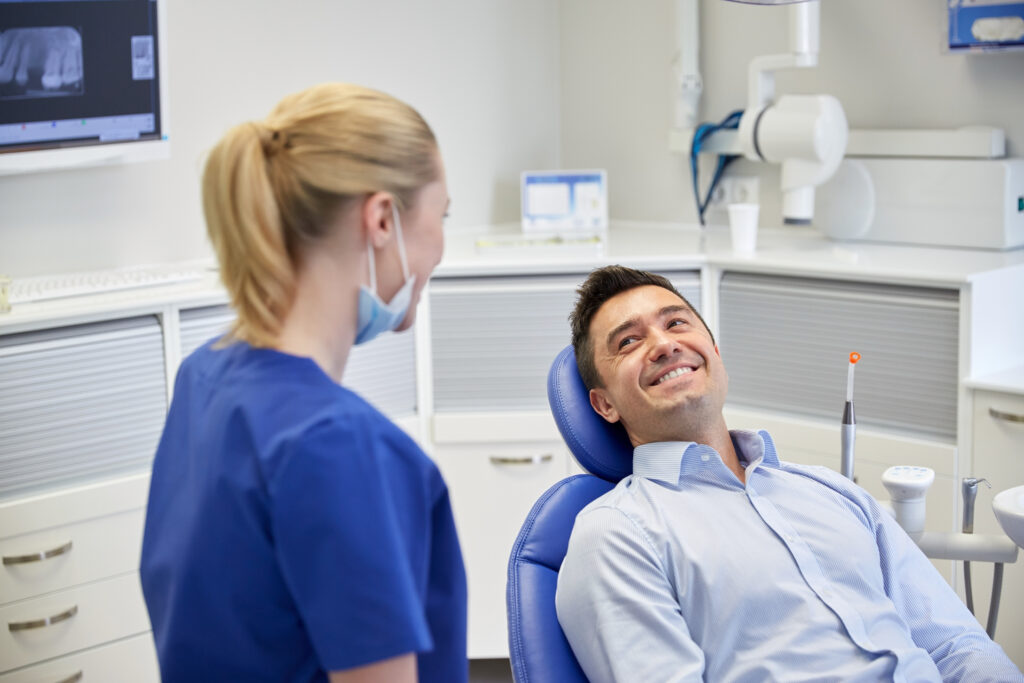
Roughly two thirds of every tooth sits below the gum line where no examination can reach. X-rays are how we see that part — the bone around your roots, the space between teeth, the area under an old filling or crown.
At Renova Dental we use digital sensors rather than film. A small sensor is placed in your mouth, the image appears on the monitor almost immediately, and Dr. Parisa can enlarge it and turn the screen toward you to explain exactly what she is looking at.
A digital X-ray uses an electronic sensor in place of the old photographic film. The sensor captures the image and sends it straight to a computer, where it is stored in your chart.
Nothing about the experience changes for you — the sensor sits in your mouth the same way a film packet used to. What changes is the speed, the clarity and the dose.
Film had to be chemically developed in a darkroom, which took several minutes and could not be adjusted afterwards. If it came out too dark, the X-ray had to be retaken. A digital image appears in seconds, can be brightened, magnified and contrast-adjusted without another exposure, and never degrades in storage. It also uses a fraction of the radiation film required.
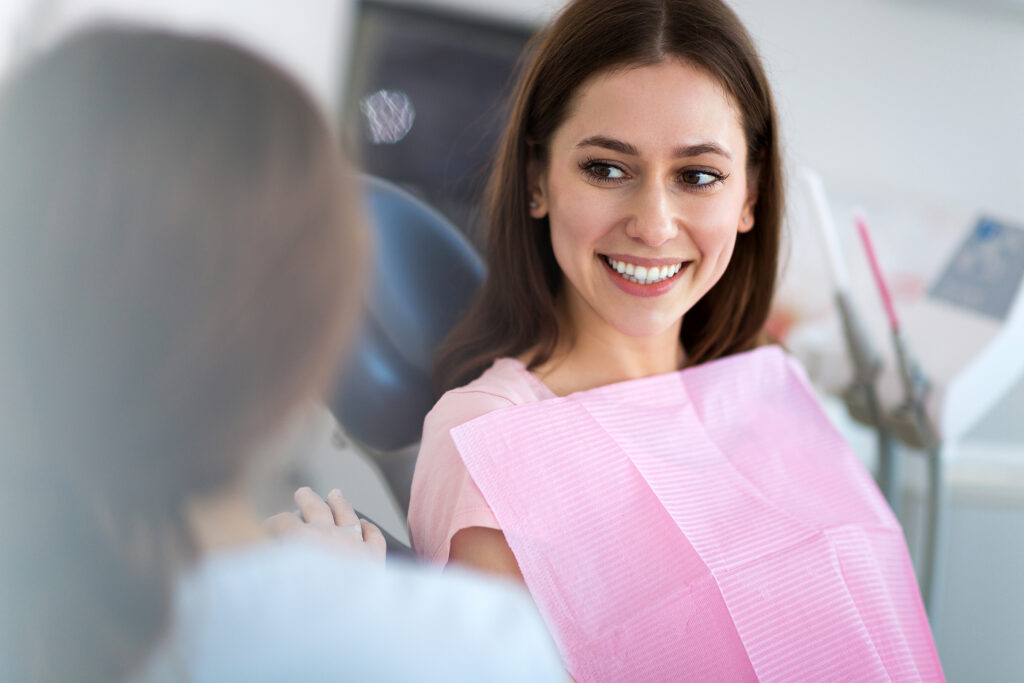
You will be given a protective apron and, where appropriate, a thyroid collar. A small sensor is placed in your mouth and you bite gently to hold it in position. The exposure itself lasts a fraction of a second, and the image appears on the monitor straight away. A full set of bitewings usually takes only a few minutes from start to finish, and there is no discomfort beyond the sensor resting against your cheek.
We take images when there is a clinical reason to, not on a fixed schedule for everyone.


Digital X-rays involve a very small dose of radiation — considerably less than the film images they replaced, and small in comparison with the background radiation you are exposed to in everyday life. We use protective aprons and thyroid collars as standard, limit images to what is clinically necessary, and take particular care with children and patients who are pregnant. If you are pregnant or think you may be, tell us before your appointment and we will plan accordingly.
Ready to see what we see? Call 1-905-591-9569 or book online and we’ll walk you through your own images at your next visit. Renova Dental is at 6284 Main St in Stouffville, and we accept the Canadian Dental Care Plan.
Very little. Digital sensors require only a fraction of the exposure traditional film needed, and a set of routine bitewings represents a small dose compared with the background radiation you receive from everyday life over a few days.
It depends on you. A patient with a history of decay or gum disease may need images more often than someone with a stable, low-risk mouth. We set the interval from your own risk rather than a fixed rule.
Routine imaging is usually postponed during pregnancy, though an urgent X-ray can be taken safely with appropriate shielding if a dental problem needs treating. Please tell us if you are pregnant or may be.
No. The sensor rests against your teeth and cheek while you bite gently to hold it in place. Some patients find it slightly awkward for a moment, but it is not painful.
Yes. They appear on the monitor beside the chair, and Dr. Parisa will turn the screen toward you and explain what each area shows before discussing any treatment.
Yes. Because the images are digital we can forward them electronically to a specialist, another dental office or your insurance provider, usually the same day you ask.
Decay between teeth and under existing fillings, infection at the tip of a root, bone loss from gum disease, cysts, impacted wisdom teeth and the position of adult teeth still developing in children.
Diagnostic imaging is covered by most dental plans, and Renova Dental accepts the Canadian Dental Care Plan. Our team can confirm your coverage before your appointment.