
Bump on Gums: Causes, Types, and When to See a Dentist
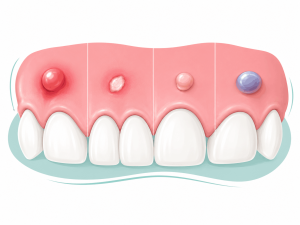
Finding a bump on your gums can be unsettling — especially if it shows up overnight, changes colour, or starts to hurt. The reassuring news: most bumps on gums are harmless and easily treated, from a simple canker sore to a bit of irritated tissue. But a few, like a gum abscess, need prompt dental care. This guide from the team at Renova Dental in Stouffville explains the most common causes of a bump on your gums, what the different types look and feel like, and exactly when it is time to see a dentist.
Quick answer: A bump on your gums is usually caused by an abscess, a canker sore, gum irritation, a harmless cyst, or a bony growth. Many clear up on their own within one to two weeks. See a dentist promptly if the bump is painful, filled with pus, bleeding, numb, or has lasted longer than two weeks — these can be signs of infection or, rarely, something more serious.
What Is That Bump on Your Gums?
“Bump on the gums” is a description, not a diagnosis. It is simply your body telling you that something has changed in the soft tissue around your teeth. That change could be an infection, inflammation, a fluid-filled sac, a reaction to irritation, or a normal bony ridge you have only just noticed.
Because the causes are so different, the clues are in the details. When you look in the mirror, notice:
- Colour — white, red, clear, or the same shade as your gums.
- Texture — soft and squishy, firm, or rock-hard.
- Pain — does it hurt on its own, only when touched, or not at all?
- Location — near the gumline, between teeth, or on the bone behind a molar.
- Time — did it appear suddenly, and is it growing, shrinking, or unchanged?
Those five details help you — and your dentist — narrow down what the bump on your gums actually is.
Common Causes of a Bump on Your Gums
Here are the causes we see most often at our Stouffville practice, from the very common to the rare.
1. Gum or Tooth Abscess (a “Gum Boil”)
An abscess is a pocket of pus caused by a bacterial infection, usually from deep decay, a cracked tooth, or advanced gum disease. It often looks like a red or yellowish bubble on the gums and can be very tender. You might notice a bad taste, swelling, or throbbing pain. This is the most common reason people search for a “bump on my gums that hurts.”
An abscess will not heal on its own and can spread, so it needs prompt treatment — typically drainage, a root canal, or in some cases an extraction. If you also have facial swelling or fever, treat it as a dental emergency.
2. Canker Sore (Aphthous Ulcer)
A canker sore is a small, round ulcer with a white or yellow centre and a red border. It is a common cause of a painful white bump on the gums and can sting when you eat or brush. Canker sores are not contagious and are not a sign of infection — they are usually triggered by minor trauma, stress, acidic foods, or hormonal changes. Most heal on their own within 7 to 14 days.
3. Gingivitis and Gum Disease
When plaque builds up along the gumline, gums become inflamed, puffy, and prone to bleeding — sometimes forming soft, swollen gingivitis bumps on the gums. Left untreated, gingivitis can progress to periodontitis, which damages the bone that supports your teeth. The good news is that early gum disease is reversible with a professional cleaning and better home care.
4. Dental Cyst
A cyst is a fluid-filled sac that can form around the root of a tooth, often one that is dead or damaged. Cysts tend to grow slowly and are frequently painless, which is why many people ask, “why is there a bump in my gums” when there is no discomfort at all. Small cysts may just be monitored, while larger ones are removed. A dentist confirms a cyst with an X-ray.
5. Oral Fibroma
A fibroma is a harmless lump of scar-like tissue that forms in response to repeated irritation — from a denture that rubs, cheek biting, or a rough filling. It is typically a hard, smooth, painless bump on the gums that stays the same colour as the surrounding tissue. Fibromas are benign, but a dentist can remove one easily if it is in the way or bothering you.
6. Mucocele (Oral Mucous Cyst)
A mucocele is a soft, clear or bluish bump on the gum or inner lip that forms when a small saliva gland gets blocked, often after a minor bite or injury. It looks like a tiny fluid-filled blister or bubble on the gums. Many mucoceles pop and heal by themselves, but ones that keep coming back should be checked.
7. Bony Growth (Torus or Exostosis)
A torus is a normal, benign overgrowth of bone. It feels like a hard bump on the gums and is common on the roof of the mouth or along the lower jaw near the molars. Tori are painless, grow very slowly, and are not dangerous — they usually only need treatment if they interfere with a denture or with eating.
8. Teething or an Erupting Tooth
In children, a bump can appear as a new tooth pushes through, sometimes with a bluish eruption cyst over it. In adults, a firm bump behind the back teeth is often a wisdom tooth coming in. When the gum over a partly erupted wisdom tooth gets inflamed (pericoronitis), it can become swollen and sore.
9. Oral Cancer (Rare, but Important to Rule Out)
Most gum bumps are harmless, but a persistent lump or sore that does not heal within two to three weeks should always be examined. Warning signs include a growth on the gums that bleeds easily, a red or white patch that will not go away, numbness, or a firm lump that keeps growing. Early detection dramatically improves outcomes, which is why we include an oral cancer screening at routine visits.
Bump on Gums, by Type: A Quick Reference
Use this table to match what you are seeing to the most likely cause. It is a starting point — not a substitute for an exam.
| What you notice | Most likely cause | Usually painful? | What to do |
|---|---|---|---|
| Red or yellow bubble that may ooze pus | Abscess (gum boil) | Yes, often throbbing | See a dentist promptly |
| Small white/yellow ulcer with a red ring | Canker sore | Yes, stings | Usually heals in 1–2 weeks |
| Hard, painless lump, same colour as gums | Fibroma or bony torus | No | Monitor; remove if bothersome |
| Clear or bluish soft blister | Mucocele | Rarely | Often self-heals; check if recurring |
| Hard bump on the bone behind a molar | Torus, or erupting wisdom tooth | Sometimes | Have it assessed, especially if sore |
| Puffy, bleeding bumps along the gumline | Gingivitis / gum disease | Tender | Book a professional cleaning |
| Firm lump or sore lasting 2+ weeks | Needs professional evaluation | Varies | See a dentist without delay |

Hard Bump on Gums Near a Molar
A hard bump on the gums by a molar has a few usual suspects. The most common is a bony torus or exostosis — a harmless ridge of bone that many people simply never noticed before. Another is a wisdom tooth or other molar pushing through the gum. If the area is also red, swollen, and sore, it may be pericoronitis (inflammation around a partly erupted tooth) or an abscess from the molar itself, both of which should be seen quickly. A quick exam and X-ray tell these apart with certainty.
White Bump on Gums, With or Without Pain
Colour and pain are useful clues with a white bump on the gums:
- White and painful — most often a canker sore, or the head of an abscess.
- White bump on the gums with no pain — frequently a fibroma, a small cyst, or normal tissue healing after irritation.
- A white patch that will not wipe away or lasts more than two weeks — this should be examined to rule out leukoplakia or other tissue changes.
A painless white bump is rarely an emergency, but if it lingers, have it checked for peace of mind.
When to See a Dentist
Contact a dentist if a bump on your gums comes with any of these signs:
- It has lasted longer than two weeks or keeps growing.
- It is painful, throbbing, or leaking pus.
- You notice bleeding that is not related to brushing, or numbness.
- You have a bad taste, loosening teeth, or trouble chewing.
- A red or white patch or sore will not heal.
Seek same-day or emergency care if you also have facial swelling, fever, or difficulty swallowing or breathing — these can indicate a spreading infection. Renova Dental welcomes dental emergencies in Stouffville, so you never have to wait in pain.
How a Dentist Diagnoses and Treats Gum Bumps
At your visit, the dentist will examine the bump, ask about your symptoms, and usually take an X-ray to see what is happening below the surface. If a lump looks unusual or persists, a small sample (biopsy) may be taken for certainty. Treatment depends entirely on the cause:
- Abscess — drainage, plus a root canal or extraction to remove the source of infection.
- Gum disease — a deep cleaning to remove plaque and tartar below the gumline.
- Fibroma or troublesome cyst — simple surgical removal.
- Torus — usually just monitored, unless it interferes with a denture.
- Canker sore or mucocele — typically heals on its own; we can ease the discomfort.
How to Prevent Bumps on Your Gums
You cannot prevent every bump, but healthy habits stop most of them before they start:
- Brush twice a day and floss daily to keep plaque — and gum disease — at bay.
- Keep up regular exams and cleanings so problems are caught early.
- Fix sources of irritation, such as a poorly fitting denture or a sharp filling.
- Avoid tobacco, which is a leading risk factor for gum disease and oral cancer.
- Wear a mouthguard for contact sports to protect your gums and teeth.
Take Care of Your Gum Health at Renova Dental
A bump on your gums is your mouth’s way of getting your attention. Most are nothing to worry about — but the only way to know for certain is a professional look. At Renova Dental in Stouffville, Dr. Parisa Tavakoli and our gentle, welcoming team will diagnose the cause quickly and get you comfortable again, in a spa-like setting designed to put nervous patients at ease.
Noticed a bump, lump, or sore that will not go away? Book an appointment online or call us at 1-905-591-9569. We are here to help.
Frequently Asked Questions
Why is there a bump on my gums?
A bump on the gums is most often caused by an abscess, a canker sore, gum irritation, a cyst, or a harmless bony growth. The colour, texture, pain level, and how long it has been there all help point to the cause. If you are unsure, a dentist can identify it with a quick exam.
Should I be worried about a bump on my gums?
Usually not — most gum bumps are harmless and temporary. Be cautious if the bump is painful, filled with pus, bleeding, numb, growing, or has lasted more than two weeks. Those signs warrant a dental visit.
What is the hard bump on my gums near a molar?
A hard, painless bump behind or beside a molar is often a bony torus (a normal bone ridge) or a wisdom tooth pushing through. If the area is red, swollen, or sore, it could be pericoronitis or an abscess and should be checked promptly.
Why do I have a white bump on my gums with no pain?
A painless white bump is commonly a fibroma, a small cyst, or tissue healing after irritation. It is rarely urgent, but if a white bump or patch lasts longer than two weeks, have it examined to be safe.
Can a bump on my gums go away on its own?
Some can. Canker sores and mucoceles often heal within one to two weeks. However, abscesses, cysts, and gum disease will not resolve without treatment and can worsen, so persistent bumps should be seen by a dentist.
Is a bump on my gums a sign of oral cancer?
Rarely. Most bumps are benign, but a firm lump or sore that does not heal within two to three weeks, bleeds easily, or comes with a red or white patch should be evaluated. Routine oral cancer screenings help catch any concerns early.
What is the painful bubble on my gums?
A soft, painful bubble that may leak pus is usually a gum abscess (gum boil) caused by infection. It needs prompt dental care — it will not clear up on its own and can spread if ignored.
This article is for general information only and is not a substitute for professional dental advice, diagnosis, or treatment. If you are concerned about a bump on your gums, please consult a dentist.
Ready to take care of your smile?
Book your visit with Renova Dental in Stouffville — CDCP accepted and insurance billed directly.
Book Your Appointment →Keep Reading