Dental Bridges vs Implants: What’s Right for Stouffville Patients?

Dental Implants•October 7, 2026•Renova Dental

Losing a tooth leaves you with a decision to make, and for most people it comes down to a dental bridge vs implant. Both can fill the gap with a natural-looking, fixed tooth, and both are proven treatments. But they work in very different ways, and the better choice depends on your mouth, your health, and your plans.

At Renova Dental in Stouffville, Dr. Parisa Tavakoli helps patients weigh these two options side by side. This guide explains the real differences in plain language, from bone health and timelines to front teeth and long-term cost, so you can walk into your consultation already knowing which questions to ask.
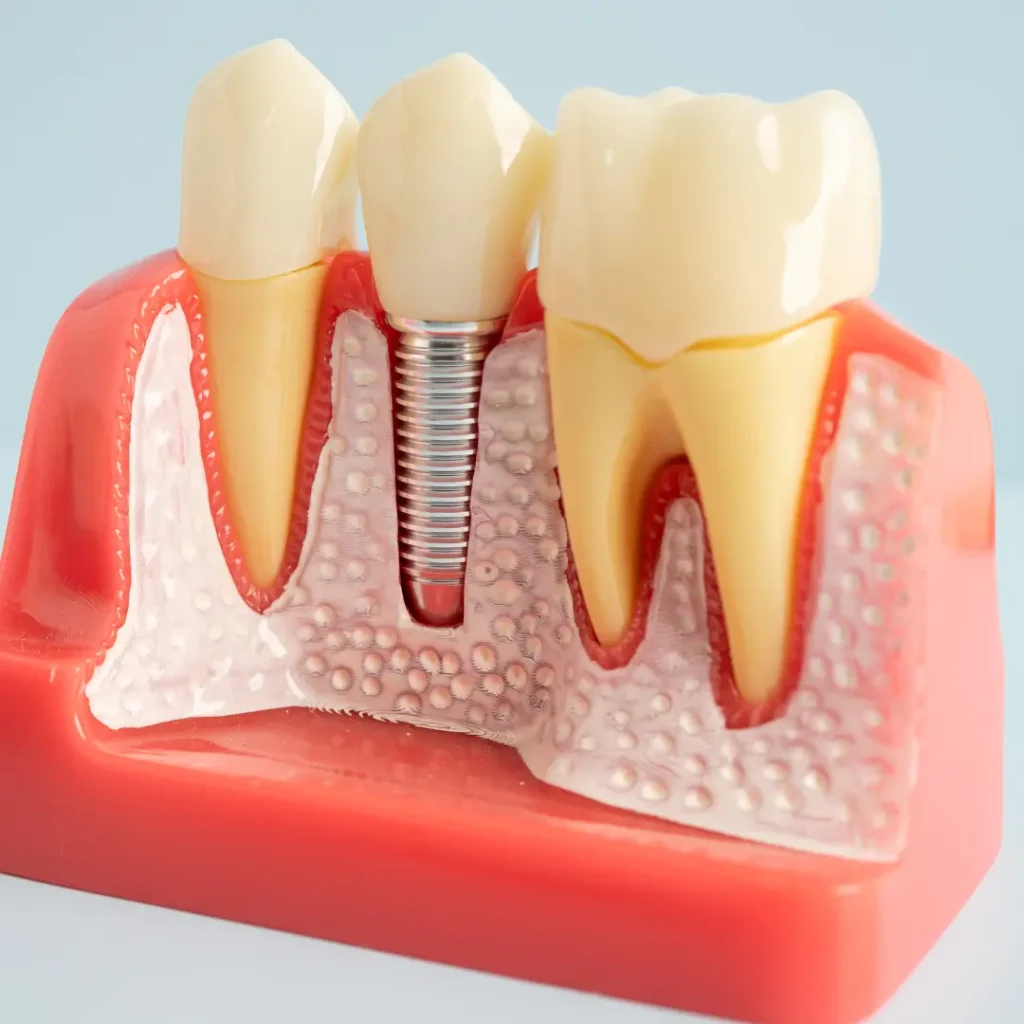
Model of a dental implant between two natural teeth, illustrating the dental bridge vs implant choice

What Is a Dental Bridge?

A dental bridge “bridges” the gap left by one or more missing teeth. A traditional bridge has a false tooth in the middle, held in place by crowns on the teeth on either side. Those side teeth are called anchor teeth, and they are reshaped to fit the crowns, which means some of their enamel is removed.

Once it is cemented, a bridge stays in place, so you don’t take it out at night. Bridges can fill a gap of one to three teeth, and they can be supported by natural teeth, implants, or both. At Renova Dental, we mainly use porcelain for a natural finish, and zirconia is another material you can ask about.

Learn more on our dental bridges in Stouffville page.

What Is a Dental Implant?

A dental implant replaces the whole tooth, including the root. A small titanium post is placed in your jawbone where the root used to be, and over the next few months, the bone bonds to it. Then a connector called an abutment and a custom crown are attached on top.

Because an implant stands on its own, the teeth beside it don’t need to be reshaped. If several teeth in a row are missing, two or three implants can carry an implant-supported bridge, so you don’t need one implant per tooth. You can read more about the process on our dental implants in Stouffville page.

Dental Bridge vs Implant: Side-by-Side Comparison

Here is how the two compare on the points patients ask about most.

Bridge Implant
Teeth beside the gap Reshaped for crowns Left untouched
Surgery No Minor, with local anaesthetic
Treatment time About 2 visits over a few weeks Usually several months
Jawbone Bone under the gap can shrink Helps keep the bone in use
Cleaning Threader or water flosser under it Brush and floss like a tooth
Upfront cost Usually lower Usually higher

How Long Does Each Option Last?

Both options can last many years with good care. A systematic review of bridge studies found that about 89% of traditional bridges were still in place after 10 years. For single implants, a later review found that about 95% of the implants themselves were still in place at 10 years, although the crown on top sometimes needs repair or replacement.

These are averages, not promises. Your own results depend on your gum health, your bite, whether you smoke or grind your teeth, and how well you keep up with home care and checkups.

With a bridge, the health of the anchor teeth matters most. If one of them develops decay or needs a root canal, the whole bridge may need to be redone. With an implant, the main long-term risk is inflammation of the gum and bone around the post, called peri-implantitis, which good cleaning and regular checkups help prevent.

When a Dental Bridge May Be the Better Choice

Implants get a lot of attention, but a bridge is still the smarter pick in some situations:

  • Your neighbouring teeth already need crowns. If the teeth on either side have large fillings or cracks, dental crowns would protect them anyway, so a bridge solves two problems at once.
  • You’d prefer to avoid surgery. Some patients aren’t comfortable with an implant procedure, or have health conditions that make surgery less ideal.
  • There isn’t enough bone for an implant, and you’d rather not have a bone graft.
  • You want a faster result. A bridge usually takes two main appointments over a few weeks.
  • Your budget is tighter right now. Bridges usually cost less upfront.

When a Dental Implant May Be the Better Choice

In the implant vs bridge decision, an implant is often the stronger long-term option when:

  • The teeth beside the gap are healthy. An implant leaves them untouched, so they keep their natural structure.
  • You want to protect your jawbone. An implant is the only option that replaces the tooth root.
  • There is no tooth behind the gap. A traditional bridge needs an anchor on both sides, and a one-sided bridge isn’t recommended for back teeth.
  • You want easier cleaning. You can brush and floss around an implant just like a natural tooth.
  • You’re thinking long term. An implant may cost more at first, but it doesn’t rely on your other teeth to stay in place.

Some health factors, such as smoking, uncontrolled diabetes, or certain medications, can affect implant healing. They don’t always rule an implant out, and we go through your medical history with you at the assessment.

What Happens to Your Jawbone After a Tooth Is Lost

Your jawbone stays healthy through use. Every time you chew, the tooth root passes that force into the bone, and the bone renews itself in response. When the tooth is gone, that signal stops, and the ridge of bone that held it starts to narrow.

Most of that shrinkage happens in the first year, and then it carries on slowly. A traditional bridge sits on top of the gum, so the bone under the false tooth keeps shrinking. An implant replaces the root, so it keeps the bone underneath in use.

Timing matters, too. The more bone that has gone, the more likely you are to need a bone graft before an implant, which adds cost and several months. That is why it pays to ask about implants before a tooth extraction, not years later.

Curious whether an implant could work for you?

Bridge vs Implant Timeline: What Each Path Looks Like

A bridge is usually finished in weeks, while an implant takes months. Here is what each path typically involves, so you can plan around work, holidays, or events.

The bridge path

  1. Exam and planning. We check the gap and the teeth on either side, take digital X-rays, and scan your teeth.
  2. First appointment. The anchor teeth are numbed and shaped, a digital scan goes to the lab, and a temporary protects the teeth.
  3. Second appointment. Your bridge is fitted, checked against your bite, and cemented in place.

Each of the two main appointments typically takes less than an hour.
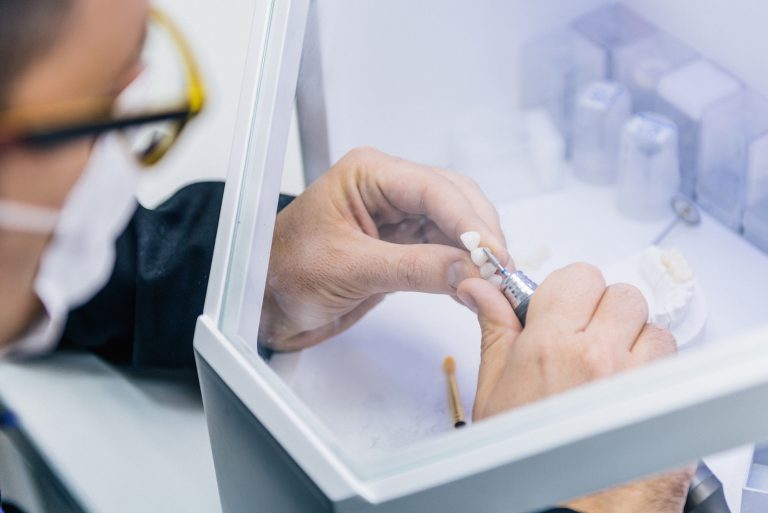
Dental technician shaping a custom restoration in a dental lab

The implant path

  1. Assessment. We check the gum and bone, and a 3D scan shows how much bone is there. You leave knowing the sequence, the timeline, and the cost before anything is booked.
  2. Extraction or graft, if needed. If the tooth is still in place or the bone is thin, that comes first, with healing time built into the plan.
  3. Implant placement. The area is fully numbed, and a single implant usually takes 30 to 60 minutes. Most people go back to work the next day.
  4. Healing. The post fuses with the bone over about three to six months. Depending on the site, a temporary tooth can often fill the gap in the meantime.
  5. Final crown. The abutment goes on, your new tooth is made from a scan, and we fit it and adjust your bite.

Dental Bridge vs Implant for Front Teeth

Front teeth deserve special care because they are the first thing people see when you smile. With a front tooth, the shape of the gum and bone around the new tooth matters as much as the tooth itself.

A front tooth implant can look very natural when there is enough healthy bone and gum. If bone has thinned since the tooth was lost, a graft may be needed first. During healing, a temporary tooth can often fill the space, so you are not left with a visible gap.

A bridge can also look excellent on front teeth, especially when the neighbouring teeth would benefit from crowns anyway. If they are healthy, ask whether a resin-bonded (Maryland) bridge suits your case. It is bonded to the back of the neighbouring teeth with small wings, so they need little or no reshaping.

For younger patients whose jaws are still growing, an implant is usually delayed until growth is complete, with a temporary option in the meantime. An iTero 3D scan puts your teeth on screen, so you can see the gap and the teeth beside it as we talk through each option.

Dental Bridge vs Implant Cost: Looking Beyond the First Bill

When comparing dental bridge vs implant cost, a bridge usually costs less at the start. An implant costs more upfront because it involves surgery, healing time, and more parts. These are typical Ontario ranges, not a quote:

Option Typical Ontario cost
Single implant, abutment, and crown $3,000–$6,500
Three-unit traditional bridge $2,500–$4,500
Partial denture, per arch $500–$1,500

Preparation such as an extraction or a bone graft is billed separately. For a full breakdown of what goes into an implant quote, read our guide to dental implant cost in Stouffville.

It also helps to think ahead. A bridge may need replacing one day, and its anchor teeth can need their own treatment, while a healed implant doesn’t depend on other teeth. Over 15 years or more, the day-one price gap isn’t the whole story.

Insurance, the CDCP, and OHIP

Private plans vary a lot. Bridges often fall under major restorative benefits, and some plans pay toward an implant’s crown but not the surgery. Many plans also have an annual maximum that one implant can use up on its own.

The Canadian Dental Care Plan does not cover implants or fixed bridges: both are on the exclusions list in the plan’s CDCP Dental Benefits Guide. It does cover complete and partial dentures, with preauthorization for partials, so a denture is the CDCP route for replacing missing teeth.

OHIP doesn’t cover dental services provided in a dentist’s office, so it won’t pay for either option. We accept the Canadian Dental Care Plan, bill insurance directly, and can give you a written plan with procedure codes for a predetermination. Flexible financing is also available for larger treatments.

Other Tooth Replacement Options: Dentures or Leaving the Gap

If you are missing several teeth, a partial denture is another option. It is removable, usually costs the least, and rests on the gum rather than in the bone, so it needs relining or remaking now and then as the ridge changes shape.

Smiling older couple sitting close together outdoors

Implants can also hold a denture firmly in place. Learn more on our dentures in Stouffville page.

There is one more answer that is sometimes right: leaving the gap alone. A missing back molar with nothing biting against it doesn’t always need replacing, and if that applies to you, we will tell you.

6 Questions to Ask Before You Choose

Bring these to your consultation. The answers usually make the choice much clearer.

  • Are the teeth beside the gap healthy, or would they benefit from crowns anyway?
  • Is there enough bone for an implant, or would I need a graft first?
  • How long would each option take, and would I have a temporary tooth in the meantime?
  • What would each option cost, itemized, and what is my insurance likely to pay?
  • Do smoking, grinding, or my gum health change the risks of either option?
  • How would I clean it, and what happens if it needs replacing one day?

For more on the restoration that sits on top of both a bridge and an implant, see our complete guide to dental crowns.

How We Help You Choose at Renova Dental

There’s no single right answer for everyone. At your visit, we’ll examine the gap and the teeth around it, take digital X-rays, and scan your teeth with our iTero scanner.

Then Dr. Tavakoli will walk you through each option, including the pros, the trade-offs, the timeline, and a written estimate. Honest recommendations are part of how we work, and we never sell what you don’t need.

To talk through your options, call us at 905-591-9569 or book a consultation online.

Frequently Asked Questions

Which is better, a dental bridge or an implant?

Neither is better for everyone. Implants protect the neighbouring teeth and the jawbone, while bridges are faster, don’t need surgery, and usually cost less upfront. The right choice depends on your teeth, bone, health, and goals.

Is a dental bridge cheaper than an implant?

Usually, yes, at the start. In Ontario, a three-unit bridge typically costs about $2,500 to $4,500, compared with $3,000 to $6,500 for a single implant with its crown. Over many years, the gap can narrow if a bridge or its anchor teeth need more work.

How long does a dental bridge last?

With good care, a bridge can last more than ten years. A large review found that about 89% of traditional bridges were still in place after 10 years. Keeping the anchor teeth healthy is the biggest factor.

How long do dental implants last?

The implant itself can last for decades. Research reports that about 95% of single implants are still in place after 10 years, though the crown on top may need repair or replacement over time. Good cleaning, regular checkups, and not smoking all help.

Does getting a bridge or an implant hurt?

Both are done with local anaesthetic, so you should feel pressure rather than pain during treatment. Some tenderness for a few days afterward is normal, especially after implant placement, and most people manage it with over-the-counter pain relief.

Can a bridge be replaced with an implant later?

Often, yes. If a bridge fails or needs replacing, an implant may be an option, depending on the health of your bone and the anchor teeth at that time. If the bone has thinned under the bridge, a graft may be needed first.

Does the CDCP cover dental implants or bridges?

No. The Canadian Dental Care Plan lists implants and fixed bridges as exclusions, though it does cover complete and partial dentures. OHIP doesn’t cover either treatment, so private insurance or paying directly is the usual route.

Is a dental bridge permanent?

A bridge is fixed in place, so you can’t take it out like a denture. It doesn’t last forever, though: bridges wear over time and may need replacing, often after ten years or more.

New Patients Welcome

Ready to take care of your smile?

Book your visit with Renova Dental in Stouffville — CDCP accepted and insurance billed directly.

Book Your Appointment →

Keep Reading

More From Our Blog