Oral Cancer Signs and Symptoms: What to Look For and When to Act
Most changes in your mouth are nothing to worry about. Cheek bites, canker sores, a patch of irritation from a sharp filling — they turn up, they annoy you for a few days, and they go. The useful thing to know is which changes behave differently, and how long is too long to leave one alone.
That is really all an oral cancer screening is: a trained pair of eyes and hands checking for the small number of changes that do not follow the usual pattern. It is quick, it is painless, and at Renova Dental in Stouffville it is part of a routine exam rather than something you book separately. This guide walks through the signs worth watching for, what raises risk, what the check involves, and when a change in your mouth is worth a phone call.
What Is Oral Cancer?
Oral cancer is cancer that develops in the mouth or oral cavity — the lips, tongue, gums, inner cheeks, and the floor and roof of the mouth — and in the oropharynx, the part of the throat just behind it. Like other cancers, it responds far better to treatment when it is found while it is still small and local.
It is not a common cancer, but thousands of Canadians are diagnosed each year, and a meaningful share of those cases are found late. That is the gap regular screening is meant to close. The mouth has an advantage most parts of the body do not: it can be examined directly, in a few minutes, at an appointment you were already attending.
Oral Cancer Signs and Symptoms: What to Look For
The signs below are grouped by how you would notice them — something you see, something you feel, or something that changes how your mouth works.
Sores and patches you can see
- A sore or ulcer on the lip, gum, tongue or inner cheek that does not heal
- A white patch, called leukoplakia, or a red patch, called erythroplakia, or a mottled red-and-white area
- A rough, crusty or thickened patch, or a clear change in the colour or texture of the tissue
- Unexplained bleeding from an area that has not been injured
Lumps and changes you can feel
- A lump, growth or thickening anywhere in the mouth, cheek, gums or neck
- A numb feeling in the tongue, lip or another part of the mouth
- Teeth that become loose with no dental explanation, or dentures that suddenly stop fitting
- Persistent pain in one spot, or pain that spreads towards the ear
Tongue and throat symptoms
- A sore or lump on the tongue, or ongoing tongue pain
- Difficulty chewing, swallowing or moving the jaw or tongue
- A sore throat, or the feeling that something is caught in the throat
- Hoarseness or a change in the voice that does not improve
The two-week rule
One detail matters more than the list itself: duration. Ordinary mouth irritations settle within a week or two. A change that is still there after two weeks — unchanged or slowly getting worse — is the one to have looked at. That single rule of thumb is what dental and health organisations consistently point to, and it is the easiest thing to remember.
Things That Look Alarming and Usually Are Not
Because it helps to know what you are ruling out, here are the common look-alikes we see far more often than anything serious:
- Canker sores (aphthous ulcers) — round, white or yellow with a red rim, painful out of all proportion to their size, and gone in seven to fourteen days.
- Cheek-bite and denture rubs — irritation in a spot that lines up with a sharp edge or an appliance. Fix the edge and it heals.
- Geographic tongue — smooth red patches with pale borders that move around the tongue over weeks. Harmless.
- Oral thrush — creamy white film that wipes off, leaving a red base. It is a fungal infection, not a patch.
- Lichen planus — fine lacy white lines, usually on both cheeks. It is monitored rather than treated urgently, but it is worth having on record.
- A bump on the gum — most often an abscess, a hormonal or irritation-related lump, or a bony growth. Our guide to bumps on the gums covers the usual causes.
None of these need panic. All of them need someone to look, because the useful skill is telling them apart, and that is not something to do from a search results page.
What Raises the Risk
Anyone can develop oral cancer, including people with none of the factors below. What these do is shift the odds, and they help your dentist decide how closely to watch.
- Tobacco in any form — cigarettes, cigars, pipes, chewing tobacco. The single largest factor.
- Heavy alcohol use, and especially alcohol combined with tobacco, where the two multiply rather than add.
- HPV (human papillomavirus), now strongly associated with cancers at the back of the mouth and throat, often in people with no tobacco history at all.
- Sun exposure to the lips over many years, particularly for people who work outdoors.
- Age over 40, though HPV-related cases are increasingly seen in younger adults.
- A previous oral cancer, which raises the importance of ongoing follow-up.
Two things are worth saying plainly. Risk factors are not a diagnosis, and having none of them is not a reason to skip a screening — a growing share of cases occur in people who never smoked.
Why Finding It Early Changes the Picture
Treatment for a small, localised lesion is usually far less involved than treatment for one that has spread to the lymph nodes, and outcomes are considerably better. Early-stage disease is also much less likely to affect speech, swallowing and appearance in the long run.
The catch is that early oral cancer is often painless. It does not announce itself the way a toothache does, which is exactly why it can go unnoticed until it is larger. A two-minute check at an appointment you are attending anyway is a low-effort way to close that gap. For a detailed clinical overview of the disease itself, the Cleveland Clinic guide to oral cancer is a reliable plain-language reference.
What Happens During an Oral Cancer Screening
There is no preparation, no dye, no discomfort, and nothing to recover from. It runs alongside your comprehensive exam and cleaning:
- A short history. We ask about tobacco, alcohol, any symptoms you have noticed and how long they have been there.
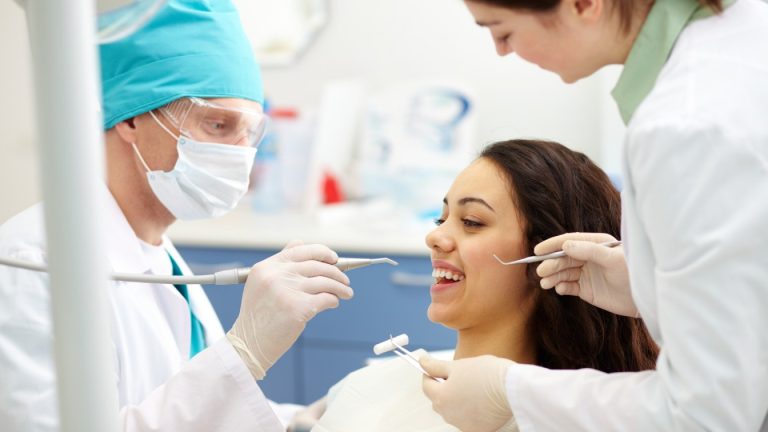
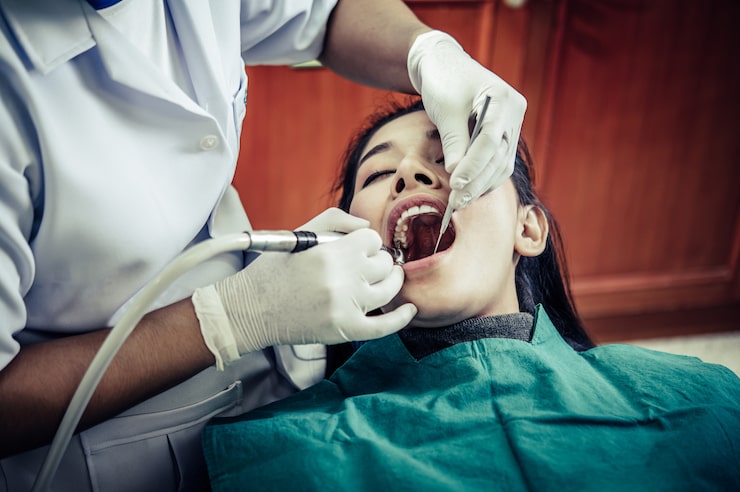
- A visual examination. Lips, gums, tongue — including underneath and along the sides — cheeks, palate, floor of the mouth and the visible part of the throat.
- A physical examination. Gentle palpation of the jaw, neck and the tissues of the mouth, feeling for lumps, firmness or enlarged lymph nodes.
- What happens next. If everything looks normal, that is the end of it. If something needs watching, we photograph or record it and re-check in two weeks. If it warrants more, we arrange further testing or a referral.
Most of the time the answer is that a change has an ordinary explanation. Being told that, by someone who has looked properly, is the point.

How to Check Your Own Mouth Between Visits
A self-check takes about a minute in good light in front of a mirror, and once a month is plenty.
- Pull your lips out and look at the inside surfaces and the gums, top and bottom.
- Use a finger to pull each cheek open and look at the whole inner surface.
- Stick your tongue out, then lift it and look underneath and along both sides.
- Tilt your head back to see the roof of your mouth.
- Run your fingers along your jawline and down each side of your neck, feeling for lumps.
You are looking for anything new, anything one-sided, and anything that is still there two weeks later. A self-check supplements a professional screening rather than replacing it — our deeper guide on why early detection matters goes further into the screening process itself.
Oral Cancer Screening in Stouffville
You do not need a separate appointment or a referral. Renova Dental includes an oral cancer screening as part of routine care at 6284 Main St in Stouffville, and because it forms part of your regular dental exam there is usually no separate charge for it. Full details are on our oral cancer screening page.
If you have noticed something specific, say so when you book so we can set aside time to look at it properly. If a change comes with pain, swelling or bleeding that will not settle, our emergency dental appointments are available during office hours. We are open Monday and Tuesday 8am to 5pm, Wednesday and Thursday 8am to 7pm, and Friday and Saturday 8am to 3pm, and we bill insurance directly and accept the Canadian Dental Care Plan for eligible patients.
How to Lower Your Risk
- Avoid tobacco in every form, and get support to stop if you use it — risk falls after quitting
- Keep alcohol moderate, and be aware that combining it with tobacco compounds the risk
- Use a lip balm with UV protection if you spend time outdoors
- Ask your physician about HPV vaccination, which is relevant well beyond cervical cancer
- Eat plenty of fruit and vegetables, and keep up daily brushing and flossing
- Check your own mouth monthly, and keep your regular cleanings and exams in the calendar
If it has been a while since your last visit, our post on the signs you should see a dentist even without pain is a useful nudge.
Frequently Asked Questions
What does oral cancer look like?
It often shows up as a sore or ulcer that does not heal, a white or red patch, or a lump or thickened area in the mouth, on the lips or on the tongue. Many of these have harmless causes, but any change that lasts more than two weeks should be looked at by a dentist.
Is an oral cancer screening painful?
No. The screening is a quick, painless check where the dentist looks at and gently feels the tissues of the mouth, jaw and neck. It usually takes only a few minutes and forms part of a regular dental exam.
How much does an oral cancer screening cost in Stouffville?
An oral cancer check is normally included as part of a routine dental exam, so there is usually no separate charge. If you have a specific concern, mention it when you book so we can allow extra time to examine it.
Who is most at risk for oral cancer?
Risk is higher for people who use tobacco, drink heavily, have HPV, have long-term sun exposure on the lips, or are over 40. Anyone can be affected, though, and a growing share of cases occur in people who have never smoked.
How often should I be screened for oral cancer?
For most people, once at every routine dental exam is appropriate, which usually means every six months. If you have risk factors such as tobacco use or a previous oral cancer, your dentist may suggest checking more often.
Can a dentist tell if a mouth sore is cancer?
A dentist can tell whether a sore looks typical or unusual and whether it needs further investigation, but only a biopsy can confirm a diagnosis. Most sores turn out to have an ordinary cause, and the value of the exam is in sorting the ordinary from the ones that need testing.
Does oral cancer hurt in the early stages?
Often it does not, which is one reason it can go unnoticed. Early lesions are frequently painless, so a change in appearance or texture that lasts beyond two weeks matters even when nothing is sore.
Can HPV cause oral cancer?
Yes. HPV is strongly associated with cancers at the back of the mouth and the throat, and these cases are increasingly seen in adults with no history of tobacco use. Vaccination and regular screening are both worth discussing with your health care providers.
Book a Check in Stouffville
If something in your mouth has been there for more than two weeks, that is reason enough to have it looked at — not because it is likely to be serious, but because finding out takes a few minutes. And if nothing is bothering you at all, the screening still happens quietly as part of your next exam.
Call Renova Dental at 1-905-591-9569 or book an appointment online. You can also read more about our team, and the Canadian Dental Association oral health resources are a good general reference between visits.
This article is general information and is not a diagnosis. If you have a symptom that concerns you, speak to your dentist or physician.
Ready to take care of your smile?
Book your visit with Renova Dental in Stouffville — CDCP accepted and insurance billed directly.
Book Your Appointment →Keep Reading