
Restorative Dentistry: Bringing Your Smile Back After Damage
A chipped front tooth after a fall. A filling that finally gave out. A molar that aches every time you bite down, or a gap where a tooth used to be. Damage like this is common, and it can affect how you eat, speak, and feel about your smile. Restorative dentistry is the part of dentistry that repairs and replaces damaged or missing teeth, so they look natural and work the way they should again.
In this guide, we’ll explain what restorative dentistry includes, which treatment fits each type of damage, how dentists choose between them, what they cost, and what “basic” and “major” restorative mean on your insurance. At Renova Dental on Main Street in Stouffville, we show you your X-rays and photos on screen and explain your options before any treatment begins.

What Is Restorative Dentistry?
Restorative dentistry covers any treatment that brings a damaged, decayed, or missing tooth back to health, function, and a natural look. The goal is simple: keep as much of your natural tooth as possible, and replace what can’t be saved. You may also hear it called dental restoration or tooth repair.
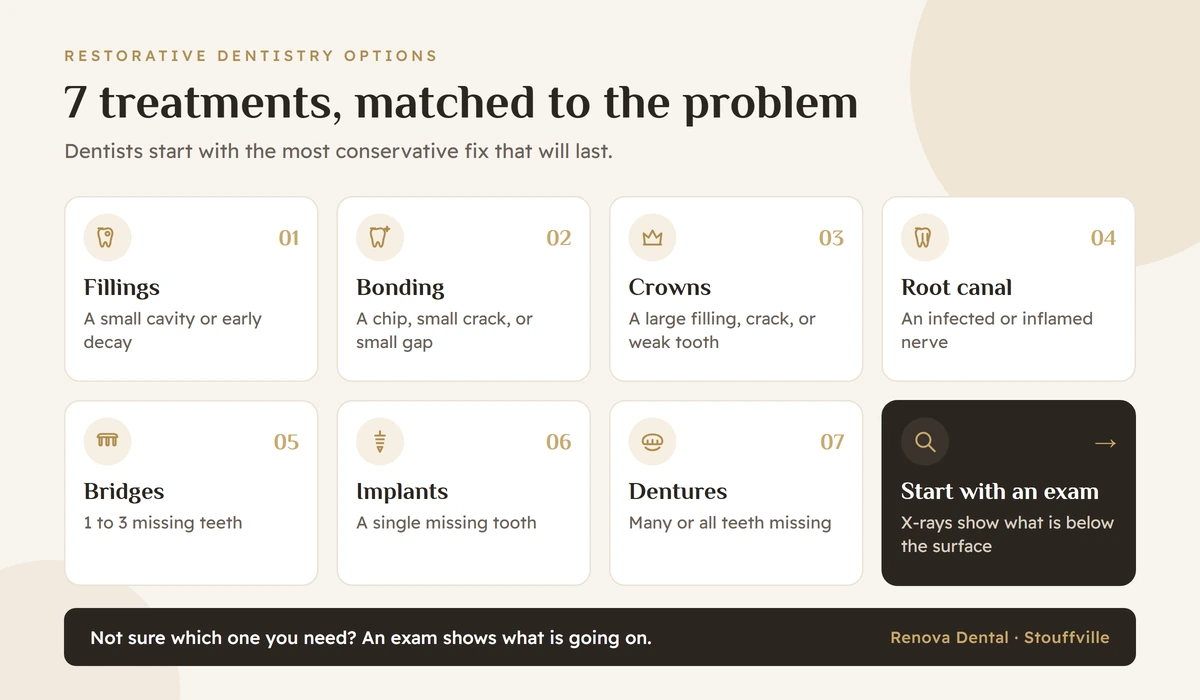
The seven most common restorative treatments are:
- Tooth-coloured fillings
- Dental bonding
- Dental crowns
- Root canal therapy
- Dental bridges
- Dental implants
- Dentures
For a general overview of how each one works, see the Canadian Dental Association’s guide to dental procedures.
Restorative vs Cosmetic Dentistry
Cosmetic dentistry focuses mainly on how your smile looks, such as whitening or veneers. Restorative dentistry focuses on fixing problems that affect your teeth’s health and function. In practice, the two often overlap. A tooth-coloured filling or a porcelain crown repairs a tooth and blends in with your smile. That’s why you’ll often hear the term “cosmetic and restorative dentistry” used together.
Which Restorative Treatment Fits Your Problem?
Not every problem needs a big fix. A good restorative plan uses the most conservative treatment that will last. Here’s how dentists usually match the damage to the repair.
A Small Cavity: Tooth-Coloured Fillings
When decay is caught early, the damaged part of the tooth is removed and the space is filled. Composite fillings are made of tooth-coloured resin, so they blend in with your tooth. The area is numbed first, and the resin is hardened with a special LED light.
Fillings are the most common procedure we perform, and with regular brushing, flossing, and checkups they should last over ten years. Learn more about composite fillings at Renova Dental.
A Chip, Crack, or Small Gap: Dental Bonding
Bonding uses tooth-coloured composite to rebuild a chipped edge, cover a small crack, or close a small gap. The dentist applies the material in layers, hardens each layer with a blue light, and polishes it to match your teeth.
It needs little or no removal of natural tooth, which makes it a conservative option for minor damage. Bonding is long-lasting but not permanent: dental bonding can last 4 to 10 years or longer. For larger repairs, a crown may be the better choice.
A Large Filling, Crack, or Weak Tooth: Dental Crowns
When a tooth is too damaged for a filling, a crown covers the whole visible part of the tooth to protect and strengthen it. Crowns are often needed after a large filling breaks, when a tooth is cracked, or after a root canal.
At Renova Dental, the damaged part of the tooth is removed, a digital impression is taken instead of a messy tray, and a temporary crown protects the tooth while your porcelain crown is made. See our dental crowns page or our complete guide to dental crowns for the types and the steps.
An Infected or Inflamed Nerve: Root Canal Therapy
If decay or a crack reaches the nerve inside the tooth, you may feel lingering pain, sensitivity to hot or cold, swollen gums, or a pimple-like bump on the gum.
Root canal therapy removes the infected tissue, cleans the inside of the tooth, and seals it, so you can keep your natural tooth instead of losing it. Our root canal page explains that treatment typically takes one or two visits, and many treated back teeth then need a crown to protect them.
One Missing Tooth: A Bridge or an Implant
A missing tooth is more than a gap. Over time, nearby teeth can shift, and the jawbone in that spot can shrink. There are two main fixed options:
- A dental bridge fills the gap with a replacement tooth held in place by the natural teeth on either side, or by implants. The process typically takes two appointments of under an hour each.
- A dental implant replaces the tooth root with a small titanium post, topped with a crown. It doesn’t rely on the neighbouring teeth, but the post needs a few months to fuse with the bone before the final tooth goes on.
Not sure which is right for you? Our guide to dental bridges vs implants compares them side by side, including cost.
Many Missing Teeth: Dentures
When several or all teeth are missing, partial or full dentures can restore your ability to chew and smile with confidence. Partial dentures fill gaps and use your remaining healthy teeth for support. Full dentures replace all the teeth in an arch. Renova Dental also offers implant-supported denture options, and regular visits let your dentist adjust the fit as your dentures and your gums change over time.
How Do Dentists Choose the Right Restorative Treatment?
Two people with similar-looking damage can need different repairs. Your dentist weighs a few things:
- How much healthy tooth is left. The more natural tooth that can be saved, the more conservative the repair.
- Where the tooth sits. Back teeth take heavy chewing force and often need a crown, while a small chip on a front tooth may only need bonding.
- The health of the nerve, gums, and bone. X-rays show decay under old fillings, infection at the root tip, and bone levels.
- Your goals, budget, and coverage. A good plan is one you can actually complete.
Every plan starts with a careful look at what’s going on. At Renova Dental, that usually includes:
- An exam and digital X-rays to check for decay, cracks, and infection, including problems below the surface.
- Intraoral camera photos, so you can see exactly what your dentist sees on the screen.
- A clear explanation of your options, including the pros and cons of each and what your insurance may cover.
- Comfortable treatment, with the area numbed for fillings, crowns, and root canals.
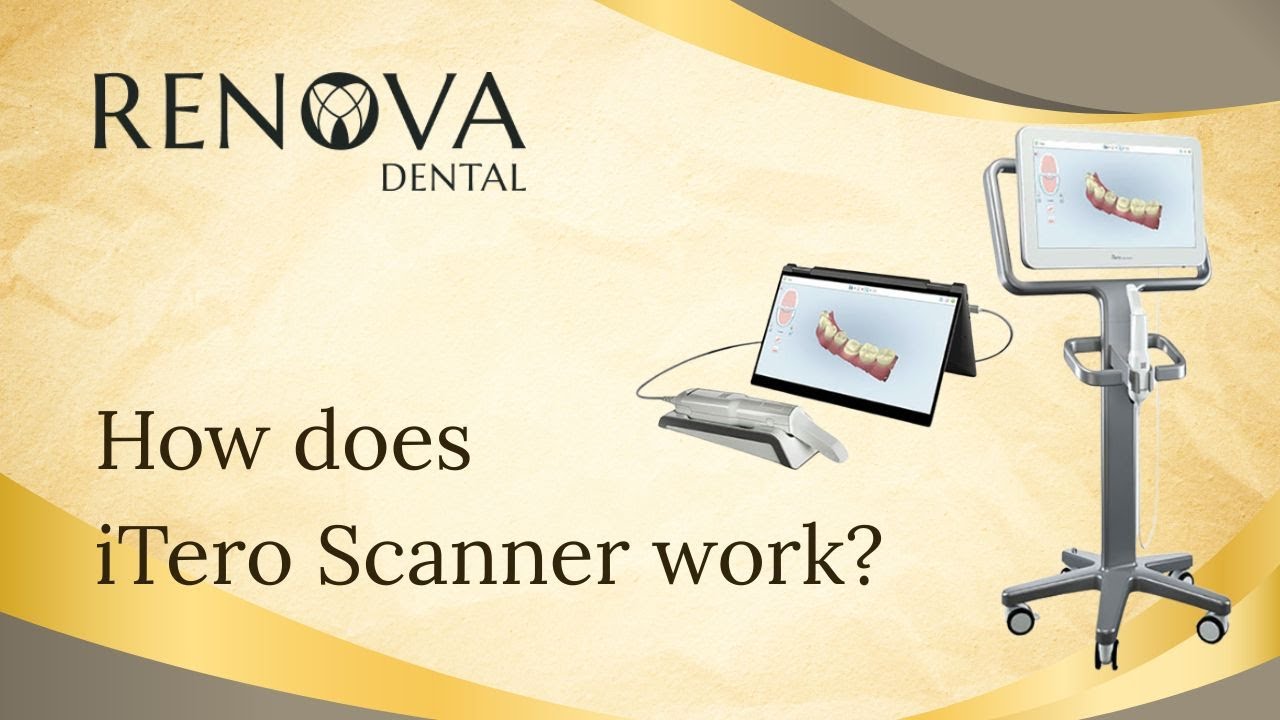
- Digital scans with our iTero scanner when a crown or other restoration needs to be custom-made, instead of messy impression trays.
Not sure which repair fits? An exam and X-rays show what is going on.
How Much Does Restorative Dentistry Cost?
Cost depends on the treatment, the number of teeth, and the materials. These are the typical ranges listed on Renova Dental’s own service pages, before insurance. They are not quotes.
| Treatment | Typical cost without insurance |
|---|---|
| Tooth-coloured filling | $120 to $300 or more |
| Dental bonding | $300 to $600 or more per tooth |
| Root canal | $600 to $1,200 or more |
| Dental crown | Estimate given before treatment |
| Dental bridge | $2,000 to $3,000 or more |
| Dental implant (one tooth) | $3,000 to $6,000 or more |
| Dentures | Varies by case |
The price moves with the number of teeth, the size and location of the problem, the materials used, whether new X-rays are needed, and how complex the case is, including infection or prep work such as an extraction or bone graft.
Dental fees also differ from one office to another, according to the Ontario Dental Association.
No dental office can give an accurate quote over the phone, so an exam comes first. Renova Dental gives detailed estimates before treatment begins, and we can provide a quote for you to send to your insurer.
What Do Basic and Major Restorative Dental Services Mean on Your Insurance?
If you’ve looked at your dental benefits, you may have seen the terms “basic restorative” and “major restorative.” Every plan defines these a little differently, but in general:
- Basic services usually include fillings and, on many plans, root canals.
- Major services usually include crowns, bridges, and dentures, and sometimes implants.
Many plans pay a higher share for basic services than for major ones, and major work often needs an estimate approved by your insurer first. Dentists set their own fees, and plans often base coverage on a suggested fee guide, so your plan may pay less than the fee charged. Check your benefits booklet before you book.
Renova Dental bills most major insurance plans directly. We also accept the Canadian Dental Care Plan (CDCP) and bill Sun Life directly.
According to the Government of Canada, the CDCP covers fillings and root canals, while crowns and partial dentures need preauthorization. Implants and fixed bridges are on the plan’s list of exclusions, so the CDCP does not pay for them.
What Is Recovery Like After Restorative Treatment?
Recovery depends on the treatment, but most restorative work is gentler than people expect.
- Fillings and bonding: Avoid chewing on the numb side until the feeling comes back, so you don’t bite your cheek or tongue.
- Crowns and bridges: A temporary crown protects the tooth while the permanent one is made. After a bridge, most patients feel only mild sensitivity that settles within a few days.
- Root canals: You usually feel relief once the infection is cleaned out. Our root canal recovery guide covers the timeline and what to expect.
- Implants: Expect swelling and tenderness for two or three days, usually peaking around day two. Most people manage with over-the-counter pain relief and return to work the next day.
- Dentures: Expect a short adjustment period while you learn to chew and speak with them.
Call us if pain gets worse instead of better, your bite feels uneven, or a filling or crown feels loose or rough.
What Should You Ask Before Starting Treatment?
A few questions make any restorative plan easier to understand:
- What are my options, and which one is the most conservative?
- What happens if I wait?
- How long should this repair last, and how do I look after it?
- What will it cost in total, and what will my insurance or the CDCP pay?
- How many visits will it take, and will I need a temporary?
- Does anything else need treatment first, such as a cavity or gum problem?
How Do You Make Your Restorations Last?
Fillings, crowns, bridges, and implants are durable, but they still need care:
- Brush twice a day with fluoride toothpaste, and clean between your teeth every day.
- Avoid chewing ice, pens, or very hard foods.
- Wear a night guard if you grind or clench your teeth.
- Keep up with regular checkups and cleanings, so small issues are caught early.
When Is It Time to Book a Restorative Visit?
Dental problems rarely fix themselves. A small cavity can grow until it needs a crown, a cracked tooth can split, and an infection can spread and become painful. Treating problems early usually means simpler, more comfortable, and less costly care. Signs it’s time to book:
- Pain when you bite or chew
- Sensitivity to hot, cold, or sweets that lingers
- A chipped, cracked, or broken tooth
- A filling or crown that feels loose or rough
- Swelling or a bump on your gums
- A gap from a missing tooth
If you’re in pain, Renova Dental offers same-day emergency appointments whenever possible. We’re open Saturdays and until 7 pm on Wednesdays and Thursdays. To book, call us at (905) 591-9569 or visit us at 6284 Main St in Stouffville.
Frequently Asked Questions
What is considered restorative dentistry?
Restorative dentistry includes any treatment that repairs or replaces damaged or missing teeth. The seven most common are fillings, bonding, crowns, root canals, bridges, implants, and dentures.
Is restorative dentistry the same as cosmetic dentistry?
Not exactly. Restorative dentistry focuses on health and function, while cosmetic dentistry focuses on appearance. Many treatments, like tooth-coloured fillings and porcelain crowns, do both.
Does insurance cover restorative dentistry?
Most private plans pay part of the cost, usually a higher share for basic services such as fillings than for major ones such as crowns, bridges, and dentures. The CDCP covers fillings and root canals, requires preauthorization for crowns and partial dentures, and does not cover implants or fixed bridges.
How long do dental restorations last?
It depends on the treatment and how well you care for it. Fillings should last over 10 years, bonding 4 to 10 years or longer, porcelain crowns 10 to 15 years or longer, and bridges over 10 years. Dentures typically last 5 to 10 years, and studies report about 95% of single implants still in place after 10 years.
Is restorative dentistry painful?
The area is numbed for fillings, crowns, and root canals, so most people feel little to no discomfort during treatment. Some sensitivity for a few days afterwards is common, and implants can bring two or three days of swelling and tenderness. Tell your dentist right away if anything hurts during treatment.
Can a chipped or cracked tooth be repaired?
Often, yes. A small chip or crack can usually be rebuilt with bonding, while a larger break or a weak tooth may need a crown. If a crack reaches the nerve, you may need a root canal and a crown. Have any cracked tooth checked soon, because a deep crack can mean the tooth can’t be saved.
How many visits does a crown or bridge take?
A bridge typically takes two appointments of under an hour each. A crown follows a similar pattern: the tooth is prepared, a digital impression is taken, and a temporary crown goes on. You return to have the permanent crown fitted once it is ready.
What should I do if a filling or crown falls out?
Call as soon as you can, and avoid chewing on that side in the meantime. Over-the-counter temporary filling products are not a permanent solution, so the tooth still needs to be repaired or replaced. Renova Dental offers same-day emergency appointments whenever possible.
Ready to take care of your smile?
Book your visit with Renova Dental in Stouffville — CDCP accepted and insurance billed directly.
Book Your Appointment →Keep Reading