Dry Mouth: Causes, Risks, and Remedies That Actually Work
Waking up with a sticky, parched mouth now and then is normal. But if your mouth feels dry most of the time, it’s worth paying attention. Dry mouth is more than uncomfortable: saliva protects your teeth and gums, so when there isn’t enough of it, your risk of cavities and mouth infections goes up.
In this guide, we explain the most common dry mouth causes, why it matters for your oral health, and the remedies for dry mouth that actually help, including what to do about dry mouth at night. At Renova Dental in Stouffville, we help patients with dry mouth find relief and protect their teeth.
What Is Dry Mouth?
The medical term for dry mouth is xerostomia. It means your mouth isn’t making enough saliva, or the saliva it makes isn’t doing its job well.
It’s also common. The College of Dental Hygienists of Ontario notes that at least 1 in 5 people have it, and up to half of older adults.
Saliva does a lot more than keep your mouth wet. It:
- Washes away food bits and germs
- Helps neutralize the acids that cause tooth decay
- Carries minerals that help repair early damage to enamel
- Makes it easier to chew, swallow, taste, and speak
According to the U.S. National Institute of Dental and Craniofacial Research (NIDCR), dry mouth is not a normal part of aging. If it lasts, something is usually causing it, and that cause can often be found and managed.
Common Dry Mouth Symptoms
- A sticky or dry feeling in your mouth or throat
- Thick or stringy saliva
- Trouble chewing, swallowing, tasting, or speaking
- A burning feeling on your tongue
- Cracked lips, sore corners of the mouth, or a dry, rough tongue
- Mouth sores
- Bad breath
- Dentures that feel loose or rub
What Causes Dry Mouth? 8 Common Causes
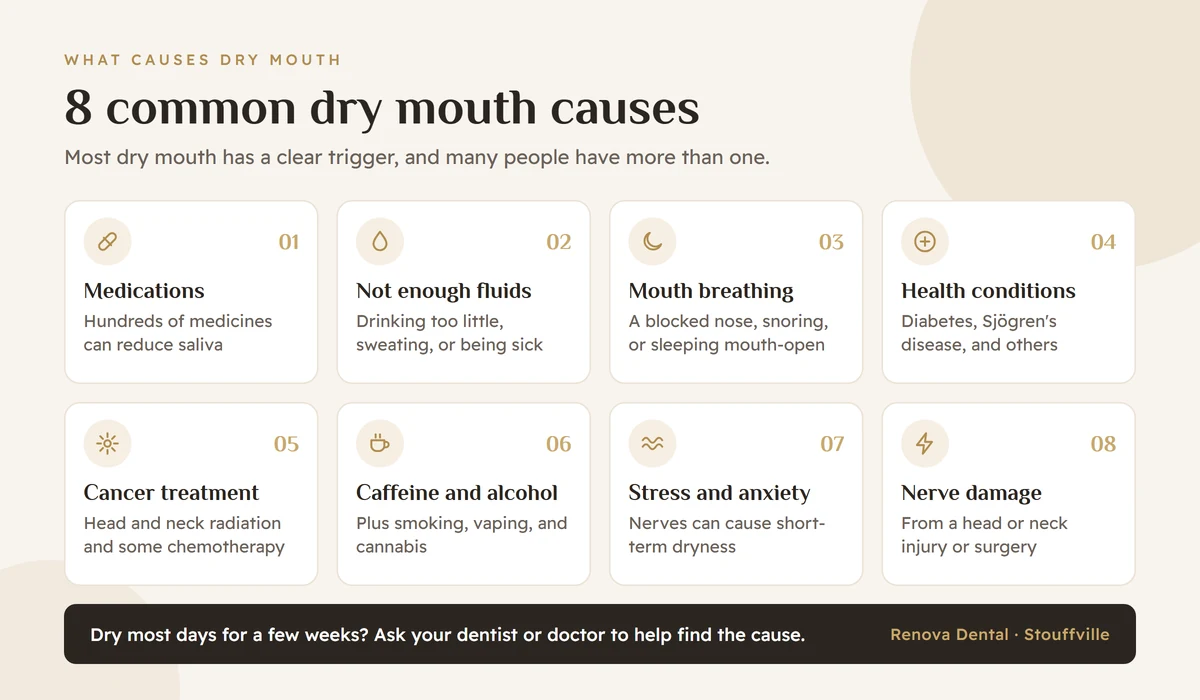
Most dry mouth causes are easy to spot once you know where to look, and many people have more than one. Medications top the list, but everyday habits play a big role too.
1. Medications
Medicine is the most common cause. Hundreds of medicines can reduce saliva, including many sold without a prescription.
Common culprits include some medicines for blood pressure, depression, anxiety, and bladder control, plus certain antihistamines, decongestants, muscle relaxants, and pain relievers. Taking several medicines at once can make dryness worse.
Important: Don’t stop or change a medicine on your own if you suspect dry mouth from medication. Talk to your doctor or pharmacist, since a dose change or a different medicine can sometimes help.
2. Not Drinking Enough Fluids
Dehydration is one of the simplest causes. It can come from not drinking enough, sweating a lot during exercise or hot weather, or being sick.
3. Mouth Breathing and Snoring
Breathing through your mouth dries it out quickly, especially overnight. A blocked nose from a cold or allergies, snoring, and sleeping with your mouth open are common reasons.
4. Health Conditions
Some health conditions can cause it, including:
- Diabetes
- Sjögren’s disease, an immune condition that affects the glands that make tears and saliva
- HIV/AIDS
- Parkinson’s disease, Alzheimer’s disease, and stroke
5. Cancer Treatment
Radiation to the head and neck can damage the salivary glands, and the damage may be temporary or permanent. Chemotherapy can also change how much saliva you make and make it feel thicker.
6. Caffeine, Alcohol, Smoking, and Vaping
Coffee, tea, energy drinks, and alcohol can all leave your mouth drier. Smoking, vaping, and cannabis dry and irritate the mouth too.
In fact, caffeine is the dietary factor most often linked to dry mouth, according to the College of Dental Hygienists of Ontario.
7. Stress and Anxiety
Feeling nervous or anxious can cause short-term dry mouth, like the dryness some people notice before giving a speech. Some medicines used to treat anxiety can also reduce saliva.
8. Nerve Damage
An injury or surgery in the head or neck area can damage the nerves that tell your salivary glands to make saliva.
Why Is My Mouth So Dry When I Wake Up?
Your body makes less saliva while you sleep. If you also breathe through your mouth at night, the moving air dries your mouth even more.
Dry mouth at night and dry mouth while sleeping are often linked to:
- A stuffy nose from colds or allergies
- Snoring or sleep apnea
- A CPAP machine without enough humidity, or a mask that leaks
- Dry indoor air, especially during Ontario winters when the heat is on
- Medicines taken in the evening
- Alcohol before bed
If you often wake up with a dry mouth and a headache, or you snore loudly and still feel tired after a full night’s sleep, mention it to your doctor. Both can be signs of sleep apnea, which is worth checking for.
The Risks of Dry Mouth for Your Teeth and Gums
Because saliva protects your mouth, long-term dry mouth can lead to:
- Tooth decay. Cavities can form faster, especially along the gumline.
- Gum disease. Plaque builds up more easily, which raises the risk of gingivitis and gum infection.
- Fungal infections. Oral thrush is more common in a dry mouth.
- Mouth sores and cracked lips, including sore, split skin at the corners of the mouth.
- Trouble wearing dentures. Saliva helps dentures stay in place and feel comfortable.
- Poor nutrition. When chewing and swallowing get hard, it’s easy to skip healthy foods.
This is why dry mouth is worth mentioning at your regular cleanings and exams. Catching early changes can save you from bigger problems later.
Our comprehensive exam and cleaning includes examining every tooth and measuring your gums. Patients with a higher cavity risk may need visits every three to four months instead of every six.
Dry mouth raises your cavity risk. Regular exams catch problems early.
Dry Mouth Remedies That Actually Work
The right dry mouth treatment depends on the cause, and most people get the most relief from combining a few steps. These dry mouth remedies help most people.
Everyday Habits
- Sip water often throughout the day, not just at meals. Sucking on ice chips helps too.
- Chew sugar-free gum or suck on sugar-free candies to get saliva flowing. Products with xylitol may also help prevent cavities, but large amounts can upset your stomach.
- Limit caffeine and alcohol.
- Avoid tobacco and vaping.
- Go easy on salty, spicy, acidic, and sugary foods, which can sting a dry mouth or feed cavity-causing germs. Our guide to diet and dental health covers better choices.
- Breathe through your nose when you can.
- Check with a pharmacist before taking over-the-counter antihistamines or decongestants, since they can make dryness worse.
Dry Mouth Products: Sprays, Gels, and Rinses
Many over-the-counter products can keep your mouth moist between sips of water:
- Dry mouth sprays and gels (saliva substitutes), often made with xylitol or cellulose-based moisturizers
- Mouth rinses made for dry mouth
- Alcohol-free mouthwash
- Lip balm for dry, cracked lips
Skip mouthwashes that contain alcohol, since they can make dryness worse. If you still have your natural teeth, avoid acidic saliva substitutes, which can wear down enamel.
The College of Dental Hygienists of Ontario also suggests choosing a toothpaste without sodium lauryl sulphate (SLS). Your dentist or pharmacist can suggest products that suit you.
Remedies for Dry Mouth at Night
- Run a humidifier in your bedroom
- Keep a glass of water by your bed
- Use a dry mouth gel before sleep
- Treat nasal congestion so you can breathe through your nose
- Take dentures out at night, unless your dentist has told you otherwise
- If you use a CPAP machine, ask your sleep clinic about a heated humidifier, a chin strap, or a full-face mask
None of these needs a prescription, and together they are simple, natural ways to prevent dry mouth while sleeping.
Protect Your Teeth While Saliva Is Low
- Brush twice a day with fluoride toothpaste and floss daily.
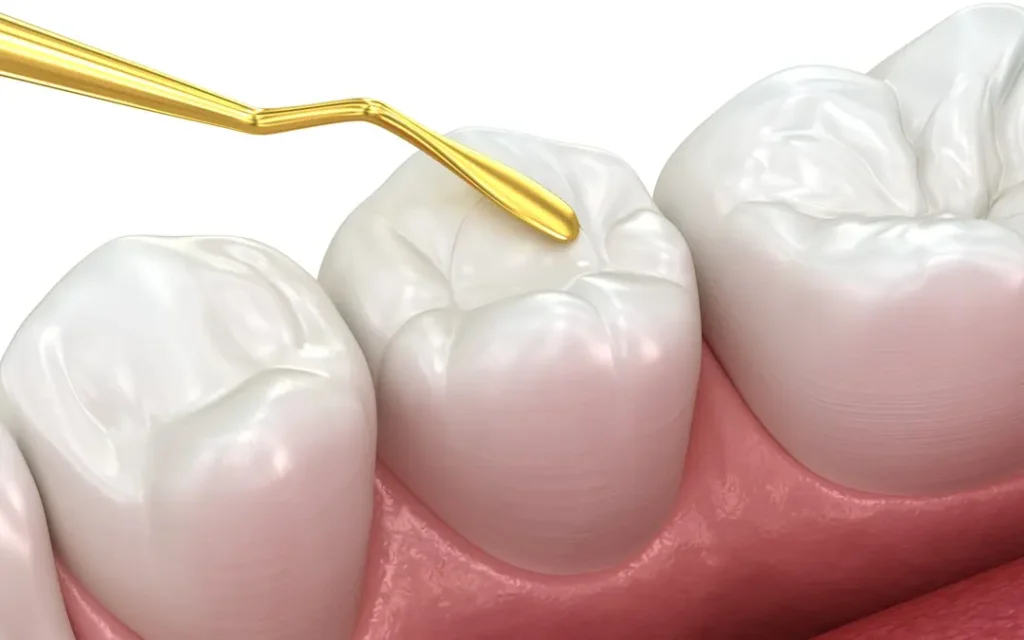
- Ask about extra fluoride. Adults with dry mouth often benefit from a professional fluoride treatment, which helps strengthen enamel.
- Your dentist may also suggest a higher-strength fluoride toothpaste or gel for home, or custom trays you fill with fluoride and wear at night.
- Keep up regular dental visits so problems are caught early.
Medical Treatment
If dry mouth doesn’t improve with these steps, your doctor may look for an underlying cause, such as a medicine side effect or a condition like diabetes. Managing that cause can ease the dryness.
For dry mouth caused by Sjögren’s disease or radiation to the head and neck, a doctor may prescribe a medicine that helps the salivary glands make more saliva, according to the Mayo Clinic. It isn’t right for everyone, so it’s a conversation to have with your healthcare team.
What Is the Fastest Way to Relieve Dry Mouth?
For quick relief, sip water, chew sugar-free gum, or use a dry mouth spray or gel. These can ease symptoms fast, but the relief only lasts a short time.
There’s no instant cure for dry mouth, because quick fixes don’t solve the cause. If your mouth is dry most days, it’s important to find out why.
Dry Mouth and Your Overall Health
Dry mouth can sometimes be an early sign of a health condition, such as diabetes or Sjögren’s disease. Your mouth often shows clues about what’s happening in the rest of your body, and a dental exam can pick up signs of conditions like diabetes.
Learn more in our post on how oral health connects to your overall health.
When to See a Dentist About Dry Mouth
Book a visit with your dentist or doctor if:
- Your mouth still feels dry after a few weeks of home remedies
- You notice new cavities, mouth sores, or sore white patches
- You have trouble eating, swallowing, or speaking
- Your dentures don’t fit or feel as comfortable as they used to
- You also have dry eyes or need to pee a lot, which can point to Sjögren’s disease or diabetes
- You think a medicine is causing it
Bring a list of every medicine and supplement you take, including over-the-counter ones. It helps your dentist or doctor spot a likely cause.
Checking your teeth and gums for damage is part of routine general dentistry, while your family doctor can look for medical causes. To book a visit with Dr. Parisa Tavakoli, call us at 905-591-9569 or book online. Renova Dental is at 6284 Main St in Stouffville.
Frequently Asked Questions
What is dry mouth a sign of?
Dry mouth is most often a side effect of medicine. It can also be a sign of dehydration, mouth breathing, anxiety, diabetes, Sjögren’s disease, or cancer treatment. If it lasts more than a few weeks, a dentist or doctor can help find the cause.
What deficiency causes dry mouth?
The most common “deficiency” behind dry mouth is simply not getting enough fluids. Low iron or vitamin B12 can make your tongue sore or burning, which can feel similar to dryness. If you’re worried about a deficiency, your doctor can check with a blood test.
Can anxiety cause dry mouth?
Yes. Stress and anxiety can cause short-term dryness. Some medicines used to treat anxiety can also reduce saliva, so mention them to your doctor if the dryness doesn’t go away.
Is there a miracle cure for dry mouth?
No. Products sold as a miracle cure for dry mouth at night or during the day can ease symptoms, but none fixes every cause. Lasting relief comes from finding the reason for the dryness and combining steps like sipping water, using a humidifier, and choosing products made for dry mouth.
How long does dry mouth last?
It depends on the cause. Dryness from anxiety or dehydration usually clears once the trigger passes, while dryness from a medicine may last as long as you take it. Damage from head and neck radiation can be temporary or permanent.
Is dry mouth bad for my teeth?
Yes. Saliva helps protect teeth from decay. Without enough of it, cavities and gum problems can develop more easily, so regular checkups and extra fluoride become more important.
What is a natural remedy for dry mouth at night?
Simple steps work well: run a humidifier, keep water by your bed, and treat congestion so you can breathe through your nose. Cutting back on alcohol and caffeine in the evening helps too.
Does xylitol help dry mouth?
Xylitol gum, mints, and sprays can help by getting saliva flowing, and xylitol may also help prevent cavities. Use it in moderation, since large amounts can cause gas or diarrhea.
Ready to take care of your smile?
Book your visit with Renova Dental in Stouffville — CDCP accepted and insurance billed directly.
Book Your Appointment →Keep Reading