
Oral Health and Overall Health: How Your Mouth Affects Your Body

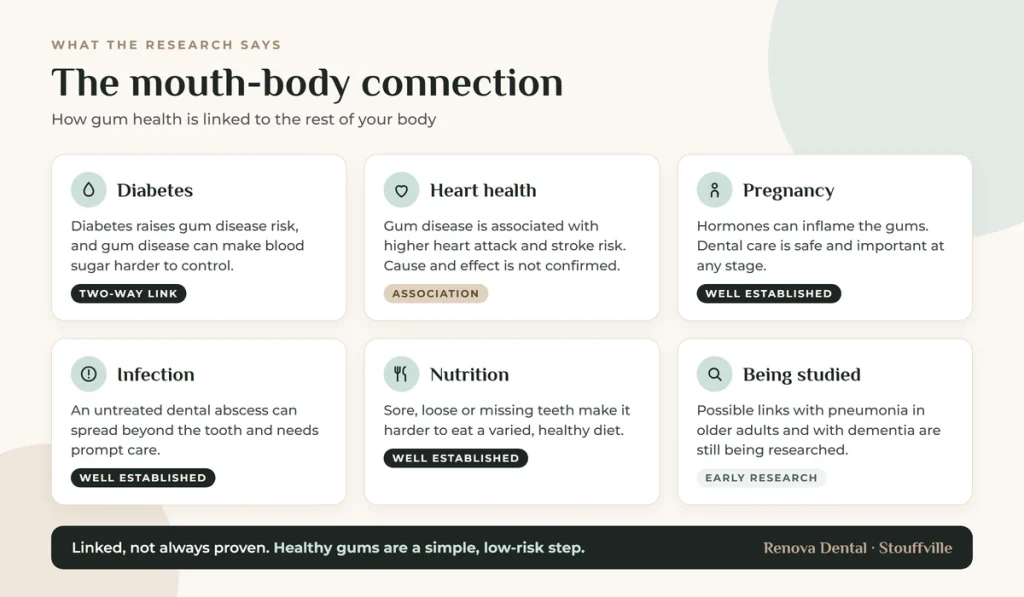
Your mouth is not separate from the rest of your body. Research has linked oral health and overall health in several ways, most strongly through gum disease: people with diabetes are more likely to develop it, gum disease can make blood sugar harder to control, and it is associated with a higher risk of heart disease and stroke. The important caveat is that most of these links are associations, not proven causes. Even so, keeping your teeth and gums healthy is one of the simplest, lowest-risk things you can do for your general health.
At Renova Dental in Stouffville, the importance of oral health for your whole body is a big part of why we take preventive care seriously. This guide explains what the research actually says, in plain language, along with the warning signs to watch for and the everyday habits that protect both your smile and the rest of you.
How Does Oral Health Affect Overall Health?
Your mouth is home to hundreds of types of bacteria, most of them harmless. Brushing, flossing and regular cleanings keep them in balance. When plaque is left to build up along the gum line, the gums become inflamed, first as gingivitis and later, if it is not treated, as periodontitis, where the tissue and bone that hold your teeth begin to break down.
That long-term inflammation is the thread running through most of the mouth-body connection. Inflamed gums bleed easily, which can let bacteria and inflammatory signals enter the bloodstream. Researchers believe this is one reason gum disease shows up alongside other inflammatory conditions, although the exact mechanisms are still being studied.
Can Bad Teeth Make You Sick?
In some cases, yes. An untreated dental infection, such as an abscess, can spread beyond the tooth into the jaw and surrounding tissues, and in rare cases it becomes a medical emergency. Swelling in the face or jaw, fever, or difficulty swallowing alongside tooth pain needs prompt attention.
More often, the effect is slower and quieter. Ongoing gum inflammation adds to the body’s overall inflammatory load, painful or missing teeth make it harder to eat a varied diet, and dental problems can affect sleep, speech and confidence. None of that happens overnight, which is why small problems are worth treating early.
What the Research Says About Oral Health and Your Body
Gum disease and diabetes
This is the best-established link. According to the National Institute of Dental and Craniofacial Research, people with diabetes have a higher chance of developing gum disease, and in turn, gum disease may make blood sugar harder to control. Diabetes can also slow healing and cause dry mouth. If you have diabetes, your dentist and your doctor genuinely work best as a team. You may also need more frequent cleanings: patients with gum disease or diabetes may need visits every three to four months, rather than every six.
Oral health and heart disease
The link between gum disease and heart disease has been studied for years. In a December 2025 scientific statement, the American Heart Association reported that periodontal disease is associated with an increased risk of heart attack, stroke, atrial fibrillation, heart failure and other cardiovascular problems. It was also clear about the limits: a cause-and-effect relationship has not been confirmed, and there is no direct evidence that treating gum disease prevents heart disease.
What the statement did suggest is practical. People with one or more cardiovascular risk factors may benefit from regular dental screenings and targeted gum care, and more frequent tooth brushing was associated with lower long-term cardiovascular risk. In other words, caring for your gums is a sensible part of a heart-healthy routine, not a replacement for one.
Pregnancy gingivitis and oral health during pregnancy
Pregnancy hormones can make the gums red, swollen and prone to bleeding, a common condition called pregnancy gingivitis. The Centers for Disease Control and Prevention notes that dental care is safe and important at any stage of pregnancy, and that poor oral health during pregnancy can lead to poorer health outcomes for both mother and baby. If you are expecting, keep up your cleanings and let your dental team know.
Other conditions being studied
Researchers are also exploring possible links between gum disease and conditions such as pneumonia in older adults and cognitive decline, including dementia. This work is still developing and far from settled, so treat it as another reason to look after your gums rather than a reason to worry.
Nutrition and quality of life
Sore, loose or missing teeth can push people toward softer, more processed foods, which affects nutrition and energy. A healthy, comfortable mouth makes it easier to eat well, sleep well and smile without thinking about it, which is its own kind of health benefit.
Signs of Gum Disease: Symptoms You Should Not Ignore
Because the mouth-body connection runs largely through your gums, it pays to know the early signs. Gum disease is the most common reason adults lose teeth, and it rarely hurts until it is well advanced. The most common gum disease symptoms are easy to miss, so book a visit if you notice any of these:
- Gums that bleed when you brush or floss
- Red, swollen or tender gums
- Persistent bad breath or a bad taste in your mouth
- Gums that are pulling away from your teeth
- Loose teeth, or a change in the way your teeth fit together
Caught early, gingivitis can often be reversed with a professional cleaning and better home care. More advanced gum disease needs deeper treatment, and our laser gum treatment page explains how we measure gum pockets and treat the problem areas.
How to Improve Your Oral Health: 6 Oral Hygiene Tips
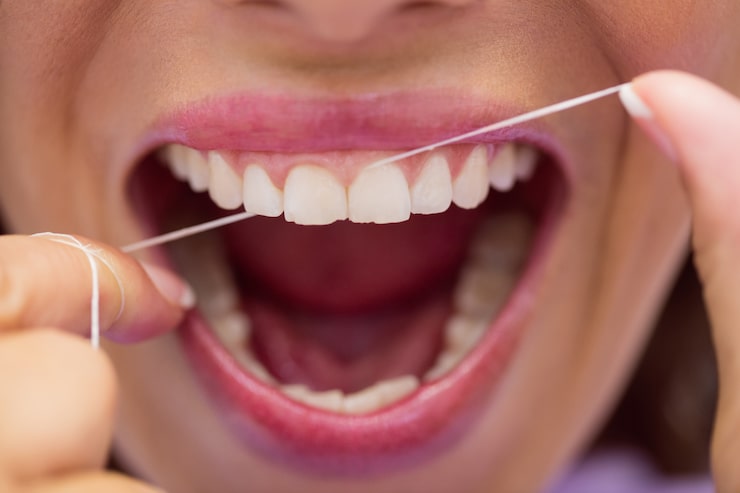
Good oral hygiene protects your mouth, and the rest of your body along with it. These oral health tips come down to a few consistent habits:
- Brush twice a day for two minutes with a fluoride toothpaste, paying attention to the gum line
- Clean between your teeth once a day with floss or interdental brushes; our flossing guide covers technique and timing
- Limit sugary drinks and snacks, especially between meals, and choose water when you are thirsty
- Eat a balanced diet rich in vegetables, fruit, lean proteins and calcium; our post on diet and dental health lists the best foods for strong teeth
- Avoid tobacco, which is one of the biggest risk factors for gum disease
- Keep chronic conditions such as diabetes well managed, and tell your dentist about any changes in your health or medications
Healthy habits matter at every age. Helping children learn to brush and floss early sets them up for a lifetime of good oral health, and for older adults, staying on top of cleanings helps protect the teeth they have.
Oral Health at Every Stage of Life
The mouth-body connection looks a little different depending on your age, and so do the habits that matter most.
Children. Baby teeth matter more than many parents expect: they help children chew and speak clearly, and they hold space for the adult teeth coming in behind them. It is recommended to bring your child to the dentist by age 1 or within six months of their first tooth. Fluoride treatments and good brushing habits help protect young teeth, and our pediatric dentistry page explains what to expect at those early visits.
Teens and adults. Gum disease becomes more common with age, and smoking, diabetes and inconsistent home care all raise the risk. Busy years are exactly when cleanings tend to slip, so booking your next visit before you leave the office is a simple way to stay on track.
Older adults. Many common medications cause dry mouth, and saliva is one of the mouth’s main natural defences, so a dry mouth raises the risk of cavities, including decay on roots exposed by receding gums. Sipping water through the day, chewing sugar-free gum and telling your dentist about new medications all help. If you wear dentures, clean them daily with a denture brush and an approved cleanser, remove them before sleeping unless you have been told otherwise, and soak them overnight to help them keep their shape. Our dentures in Stouffville page covers fit and care in more detail.
Why Regular Checkups Matter for Your Whole Body
Many oral health problems are painless at first, so waiting until something hurts often means the issue has already grown. A comprehensive exam at Renova Dental typically includes digital X-rays and an oral cancer screening, a quick check of your lips, cheeks, tongue, throat and gums, alongside a professional cleaning that removes the hardened tartar brushing cannot. Most patients should visit every six months, while those with gum disease, diabetes or a higher risk of cavities may need visits every three to four months.
Learn more about our comprehensive exam and cleaning and professional teeth cleaning in Stouffville. Even if your smile feels fine, a checkup is worth it, as we explain in our post on signs you should visit a dentist even without pain.
We bill most major insurance plans directly and accept the Canadian Dental Care Plan. If it has been a while since your last visit, whether six months or six years, call us at 905-591-9569 or book online. We are at 6284 Main St, Stouffville, open until 7 p.m. on Wednesdays and Thursdays and on Saturdays until 3 p.m.
Frequently Asked Questions
How does oral health affect overall health?
Gum disease causes long-term inflammation, and it has been linked to diabetes, heart disease and problems during pregnancy. Most of these links are associations rather than proven causes, but keeping your teeth and gums healthy is a simple, low-risk way to support your general health.
Why is oral health important?
Oral health affects how you eat, speak, and feel, and gum disease is linked to wider health problems such as diabetes and heart disease. Regular checkups also help catch problems such as oral cancer early, when they are most treatable.
Can gum disease affect diabetes?
Yes. People with diabetes have a higher chance of developing gum disease, and gum disease may make blood sugar harder to control. Patients with diabetes may need cleanings every three to four months rather than every six.
Is gum disease linked to heart disease?
Gum disease is associated with a higher risk of heart attack, stroke and other cardiovascular problems, according to a 2025 American Heart Association statement. A cause-and-effect relationship has not been confirmed, but regular dental care and brushing are sensible parts of a heart-healthy routine.
Can bad teeth make you sick?
They can. An untreated dental infection such as an abscess can spread beyond the tooth and, in rare cases, become serious. Facial swelling, fever or trouble swallowing with tooth pain needs prompt care. Ongoing gum inflammation can also affect your health more gradually.
Is dental care safe during pregnancy?
Yes. Dental care is safe and important at any stage of pregnancy, and it helps manage pregnancy gingivitis, the red, swollen or bleeding gums that hormonal changes can cause. Let your dental team know you are expecting.
What is pregnancy gingivitis?
Pregnancy gingivitis is gum inflammation caused by hormonal changes during pregnancy, which can leave the gums red, swollen, and prone to bleeding. Gentle brushing, daily flossing, and regular cleanings help keep it under control.
What are the first signs of gum disease?
Common early signs include gums that bleed when you brush or floss, red or swollen gums, and persistent bad breath. Gum disease rarely hurts in its early stages, which is why regular checkups matter.
What is the best way to improve my oral health?
Brush twice a day with fluoride toothpaste, clean between your teeth daily, limit sugary drinks and snacks, avoid tobacco, and see your dentist regularly for checkups and cleanings.
How often should I see the dentist?
Most people should have a checkup and cleaning every six months. People with gum disease, diabetes or a higher risk of cavities may need visits every three to four months.
This article is general information, not medical advice. Talk to your dentist and your doctor about your own health.
Ready to take care of your smile?
Book your visit with Renova Dental in Stouffville — CDCP accepted and insurance billed directly.
Book Your Appointment →Keep Reading